
Waterproofing services
Basement waterproofing services
Basement waterproofing services from RPC Constructions keep ground water out of basements, lift pits, retaining walls and cellar car parks, in new buildings and in ones that already leak. On new work we wrap the structure from outside and seal every joint before backfilling; on a basement that already leaks, we stop the running water and treat the walls and floor from inside.
Basements on low-lying ground sit in high ground water through the north-east monsoon, and sites in Erode, Coimbatore, Krishnagiri and Hosur on clay or near channels see the water rise each rainy season. An engineer reads the site and the structure first, and we supply the Sika and Fosroc membranes and admixtures we use.
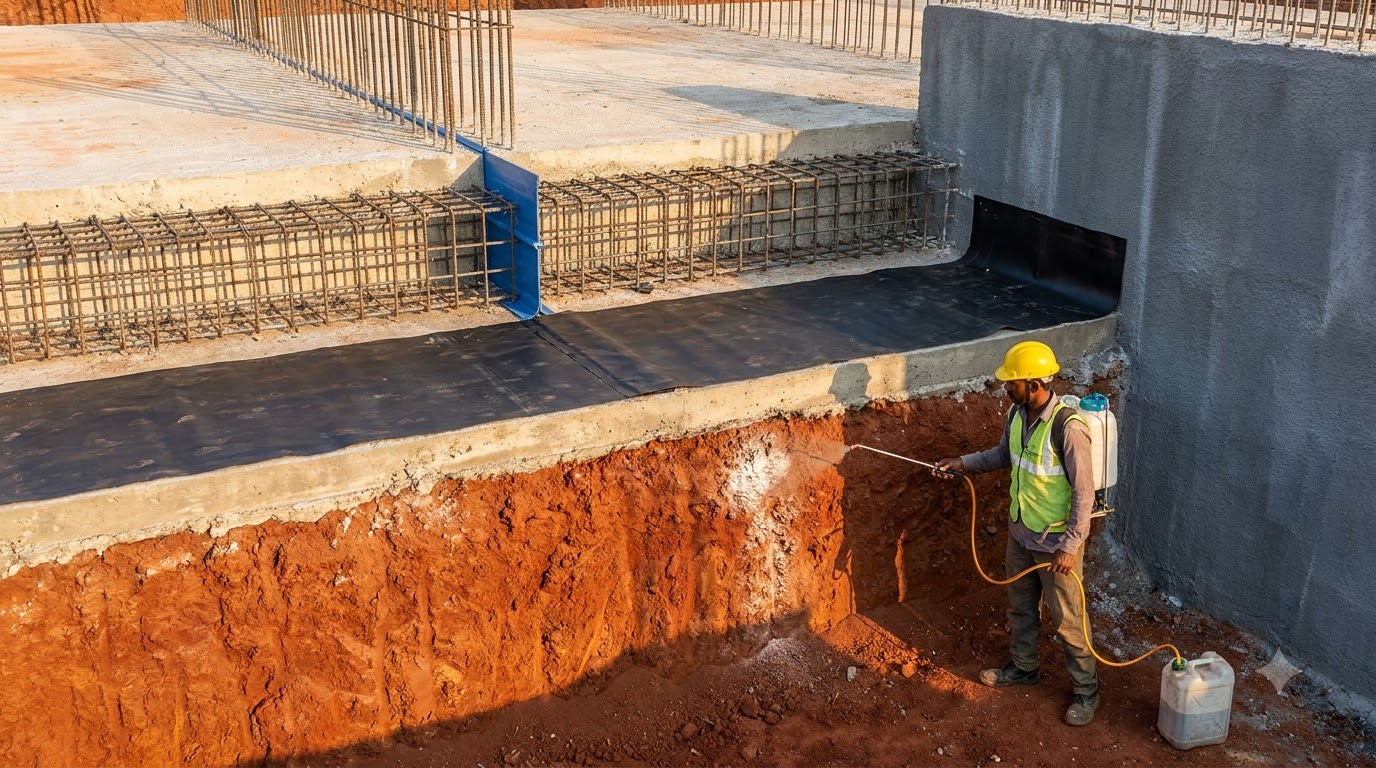
- Freesite inspection by an engineer
- Both sidesoutside on new work, inside on existing
- Own crewsno subcontractors below ground
Know the signs
Signs your basement needs waterproofing
Below ground, water pushes in from every side. These signs usually get worse after rain, when the water table rises.
Damp walls after rain
Dark patches on the basement walls that spread during the monsoon and shrink in the dry months.
Water at the floor-wall joint
A wet line or puddles where the floor meets the walls, the joint between two separate pours.
Seepage at joints and tie holes
Water through construction joints, form-tie holes and pipe entries, the weak points of any basement.
White salts on the concrete
Efflorescence on walls and columns shows water travelling through the concrete and drying on the face.
Water standing in the lift pit
A wet or flooded lift pit, which can damage the lift equipment and stop the lift.
Rust and falling concrete
Brown stains or spalling on columns and the slab soffit in a cellar car park mean the steel is corroding.
Methods
Basement waterproofing methods we use
The side we can reach decides most of the method. Positive side is the face the ground water reaches; negative side is the face inside the basement.
| Method | Stage | Side | Best for |
|---|---|---|---|
| HDPE or bituminous membrane | New construction | Outside (positive) | Raft, walls and retaining walls before backfilling |
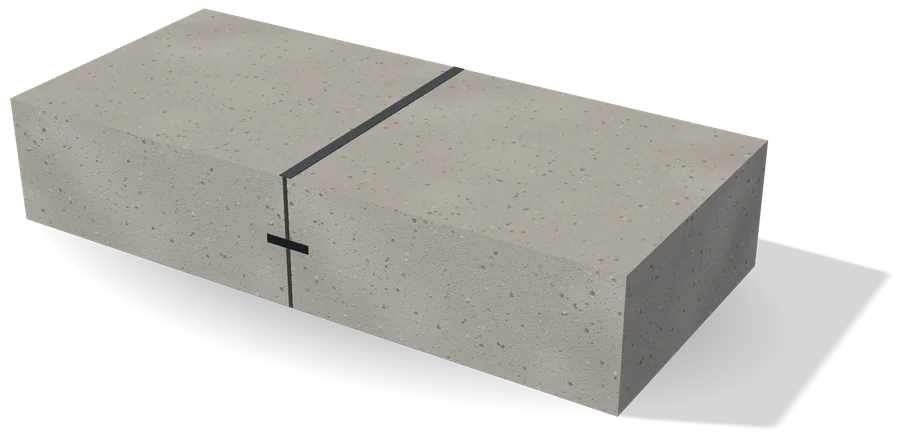
| Waterstops in construction joints | New construction | In the joint | Every raft-to-wall and wall-to-wall joint |
| Crystalline treatment | New or existing | In the concrete, or inside | Walls and rafts that take water through fine cracks |
| Injection grouting | Existing | From inside | Leaking cracks, joints and tie holes |
| Rapid plug and cementitious lining | Existing | Inside (negative) | Running leaks first, then a lining for damp walls |
Outside is always the better side. On a finished building, inside is often the only face we can reach, so the leaks are stopped first and the lining is built to resist water pressure.
Basement seepage and leakage repair in existing buildings
In an existing basement the soil is already against the walls, so the repair is done from inside. We map every leak with the walls dry, then stop running water at joints and holes with a rapid-setting plug, inject leaking cracks and joints, and apply a crystalline treatment and a cementitious lining over the walls and the floor-wall joint.
Where water rises through the raft, the floor is treated too, and we check the drainage around the building, because a blocked drain or a broken rainwater pipe outside often feeds the leak.
Lift pit waterproofing
A lift pit is the lowest point of the building, so it takes the most water pressure. Even a small leak floods the pit and can damage the buffers and the wiring. For new pits we waterproof the outside and the joints before the walls are backfilled; for wet pits in use, we pump out, plug and inject the leaks, and line the pit from inside. We work with the lift company so the lift is stopped for as short a time as possible.
Retaining wall and foundation waterproofing
Retaining walls hold back wet soil on one side and must let that water drain away rather than build up. We lay a membrane or a waterproof coat on the soil face, protect it, and add a drainage layer and weep holes where the design needs them. For foundations and rafts, the membrane goes under and around the concrete, with waterstops in every joint, before the soil comes back.
Cellar and underground parking waterproofing
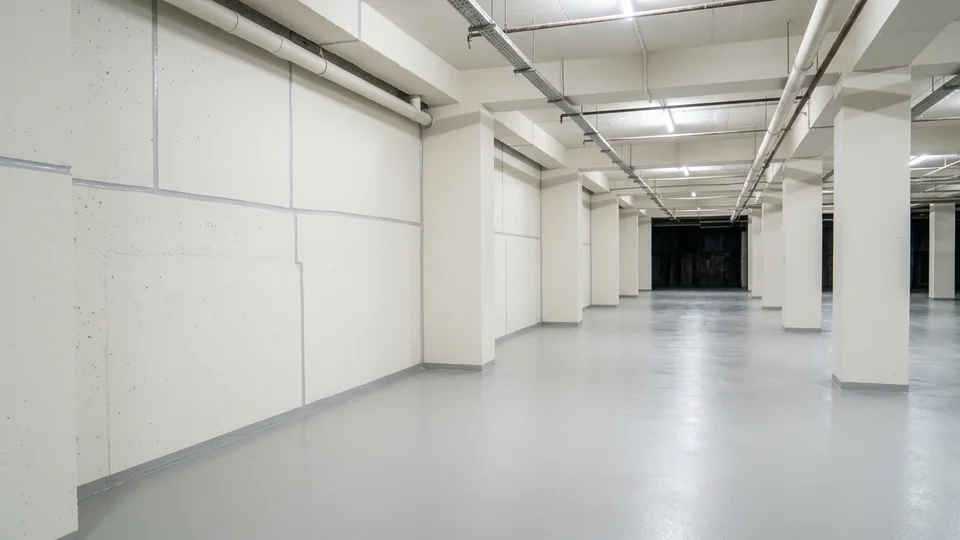
Apartment and commercial cellars take water from the ground and from the podium or ramp above. We treat the walls and joints, the ramp drain and the slab above, and repair columns where the steel has started to rust. Work is planned in bays, so most of the parking stays in use. Sumps and underground water tanks are covered on our water tank waterproofing page.
Materials
The products we use below ground
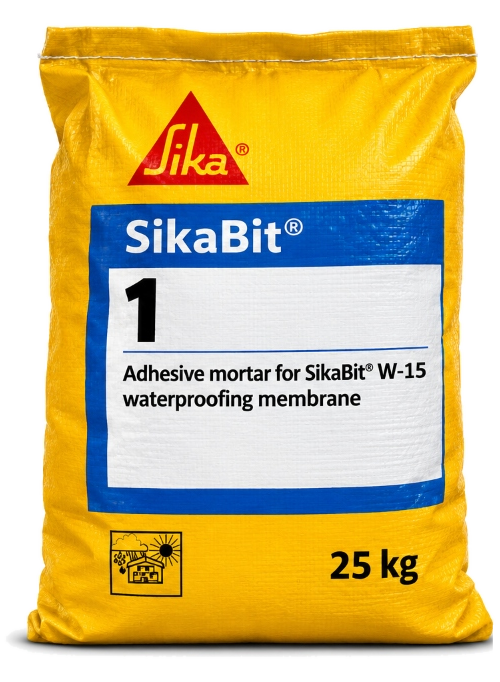
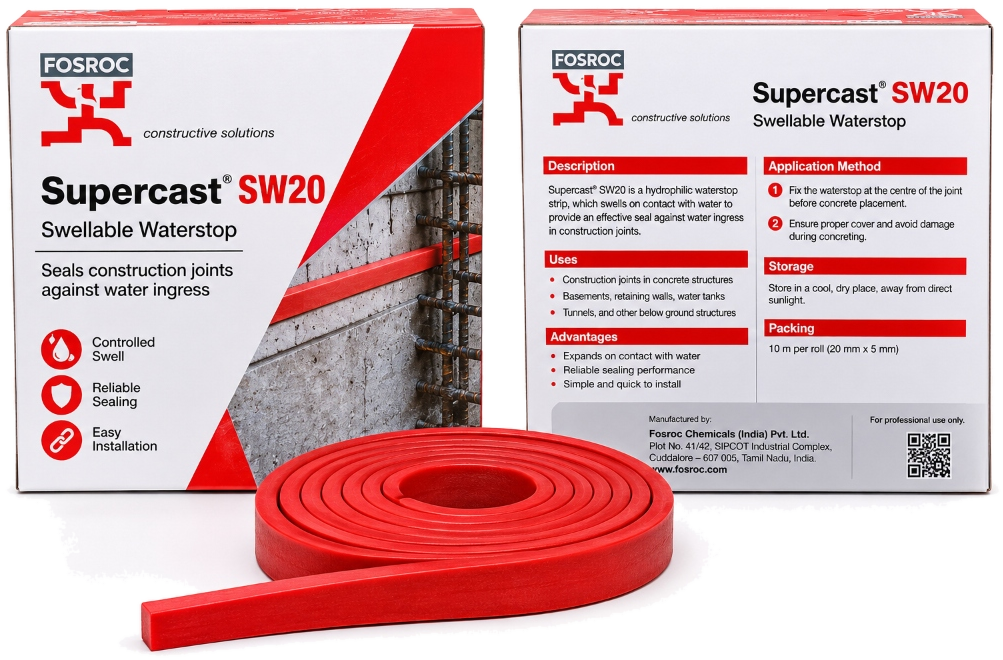
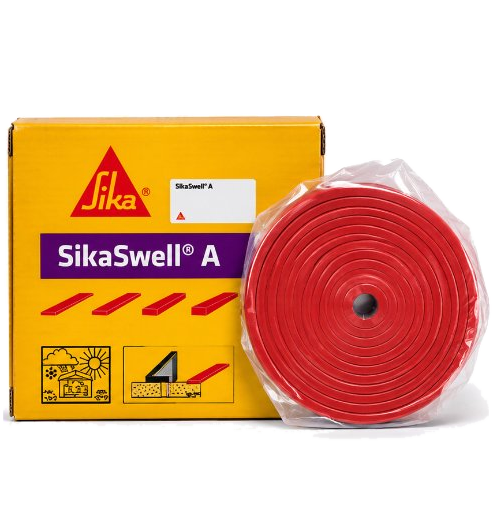
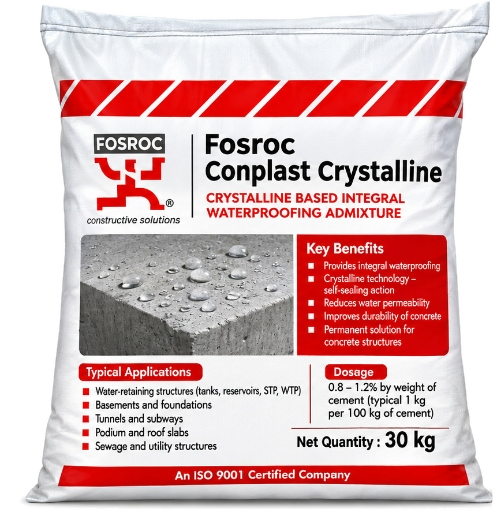
HDPE and bituminous membranes, joint waterstops, crystalline admixtures and a rapid plugging mortar from Sika and Fosroc. We supply them too, so you can see each one and what it is for.
-
Sika
Sikaproof 312 HDPE
Barrier against water ingress
-
Sika
Sika Bit W1
Barrier against water ingress
-
Fosroc
Fosroc Supercast SW20
Seals construction joints against water ingress
-
Sika
Sikaswell A2010 bar
Seals construction joints against water ingress
-
Fosroc
Fosroc Conplast Crystalline
Integral crystalline protection against water ingress
-
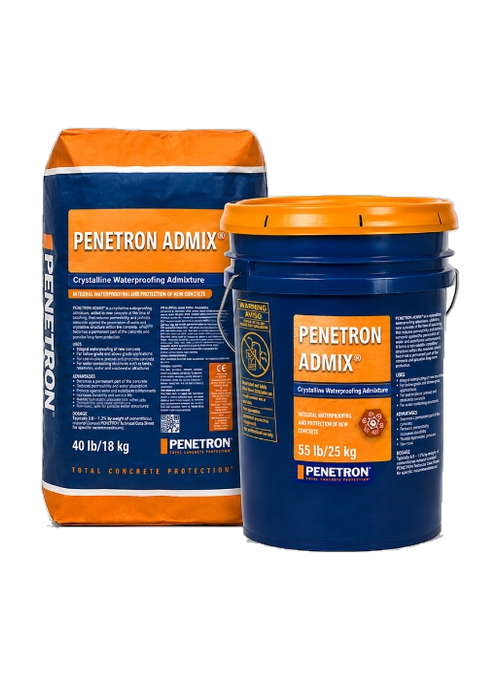
Penetron
PENETRON ADMIX
Crystalline waterproofing admixture for concrete that reacts with moisture to form insoluble crystals, reducing water permeability and permanently protecting concrete
-
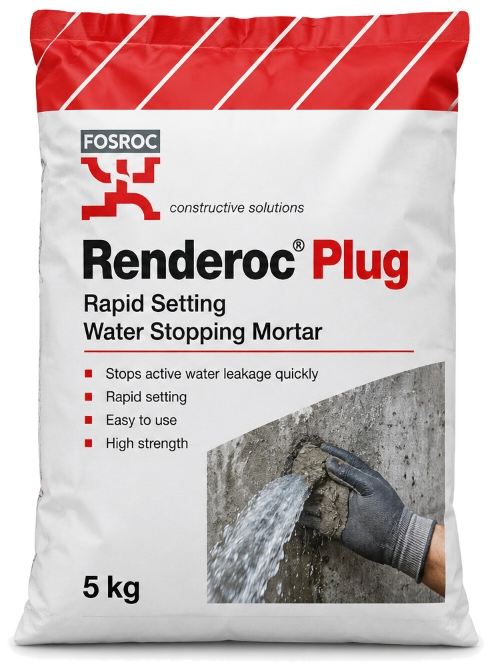
Fosroc
Fosroc Rendroc Plug
Stops active water leakage quickly
How the job runs
How our basement waterproofing works
Site and structure check
An engineer checks the walls, joints, raft and drainage, and how high the ground water rises in the rains.
One method, in writing
You get the system for each part, the products and the work sequence before we start.
Stop the running water
Active leaks are plugged and leaking cracks are injected, so the surface can be prepared dry.
Joints and details
Construction joints, tie holes, pipe entries and corners are sealed before the main layer.
The waterproofing system
A membrane outside on new work, or a crystalline treatment and lining inside on existing basements.
Check after rain and handover
We inspect the walls and joints again once the ground is wet, before we hand the basement back.
From our sites
Basement waterproofing, before and after
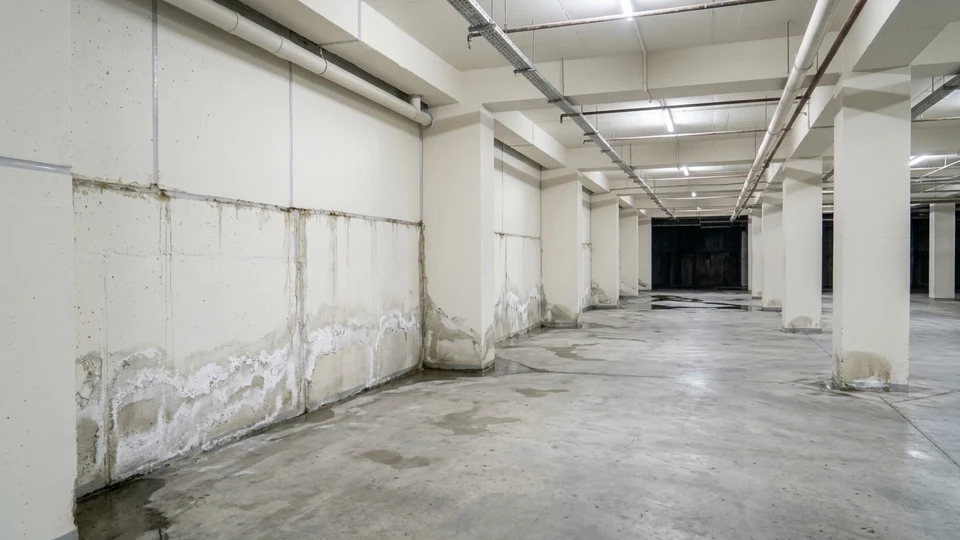
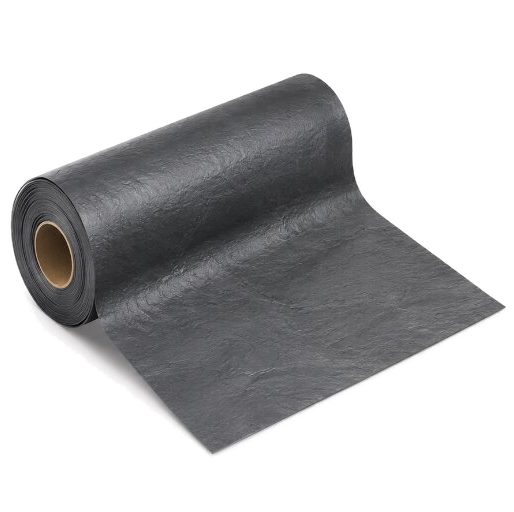
Before: seepage at the floor-wall joint After: leaks plugged and the wall lined The layers on the outside of a new basement wall 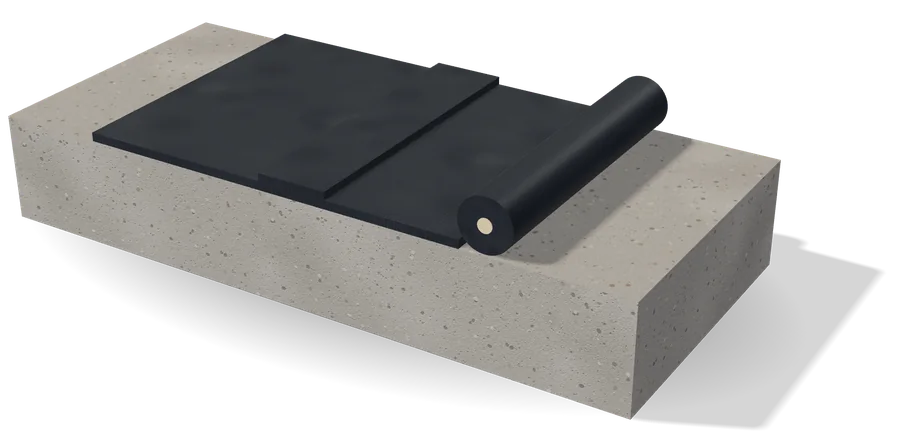
Membrane sheet, laid before the soil goes back
Our guarantee
A written guarantee with every basement
Every basement we waterproof is checked again after the ground is wet, and you get a written guarantee with the job. How long it runs depends on the system and the side we could treat, and it is stated in your quote together with what it covers.
If water comes through walls or joints we have treated within that time, we come back, find out why and put it right.
Why choose RPC Constructions
Engineer-led inspection
The leak is traced to its source before anything is suggested, free of charge.
Our own crews
The people who quote the job do the job. No subcontractors on your site.
One method, in writing
The system, the products and the area they cover, named before work starts.
Products we supply
Fosroc, Sika, CCI and Berger, stored and mixed as their makers specify.
Tested before handover
Terraces are pond-tested, tanks filled and wet areas flooded before we leave.
Three towns
A head office in Erode and teams in Coimbatore and Krishnagiri.
Questions
Basement waterproofing: your questions
Not answered here? Call +91 99423 54602 or send a photo on WhatsApp.
How much does basement waterproofing cost?
It depends on the area, the water pressure on the walls and whether we can reach the outside face. We inspect free of charge and give you one fixed price in writing, broken down by part, before any work starts.
Can a leaking basement be waterproofed from the inside?
Yes. The leaks are plugged and injected first, then a crystalline treatment and a cementitious lining go on the inside face. It is the usual repair for a finished building, where the outside is buried.
Which method is best for a basement?
On a new basement, a membrane on the outside with waterstops in the joints and a crystalline admixture in the concrete. On an existing basement, injection grouting for the leaks and a crystalline lining inside. Most basements need two or three methods together.
When should basement waterproofing be done?
During construction, before the walls are backfilled. That is the only time the outside face can be reached, and it costs far less than repairing a leak later. Talk to us before the raft is cast if you can.
Why does my basement leak only in the rainy season?
Because the ground water rises. In the dry months the water table is below the floor; in the monsoon it climbs the walls and pushes water through every joint and crack. That is why we check the work again once the ground is wet.
How long does basement waterproofing last?
A membrane laid outside during construction lasts as long as the building if it is not damaged. Inside repairs last well when the leaks are stopped first. The guarantee for your system is stated in the quote.
Can you work while the car park is in use?
Yes. We work in bays and move cars in stages, so most of the parking stays open. Lift pits need the lift stopped for a short time, which we plan with the lift company.
Related services
Often needed together
Water tank waterproofing
Water tank & sump waterproofing with linings named in writing for drinking water. Leak repair & crystalline coats. Erode, Coimbatore, Krishnagiri & Hosur.
Crack and leakage treatment
Wall crack repair & leakage treatment: we trace the leak, then seal it by PU or epoxy injection. Ceiling leaks, rising damp. Erode, Coimbatore, Krishnagiri.
Commercial Construction
Commercial building construction company for offices, showrooms, hospitals & complexes in Erode, Coimbatore, Krishnagiri & Hosur. Design-build. Get a quote.

Near you
Basement waterproofing in Erode, Coimbatore and Krishnagiri
Our head office in Erode and our branch teams take on this work in and around each town. Open your town for its local services, products and areas.
Book a free basement waterproofing inspection.
Send a photo or call
A photo of the damp patch or crack on WhatsApp is enough to start.
An engineer visits
Free of charge. We find where the water gets in before we suggest anything.
One method, one price
The system, the products and the price in writing, before work starts.
+91 99423 54602contact@rpcconstructions.comMon – Sat · 08:30 – 18:30 IST